Pharmaceutical Clean Steam & HVAC Heat Pump Integration
Validation-compliant thermal optimization and industrial heat pump integration recovering low-grade cleanroom HVAC exhaust heat to preheat pure water generation and LTHW loops.
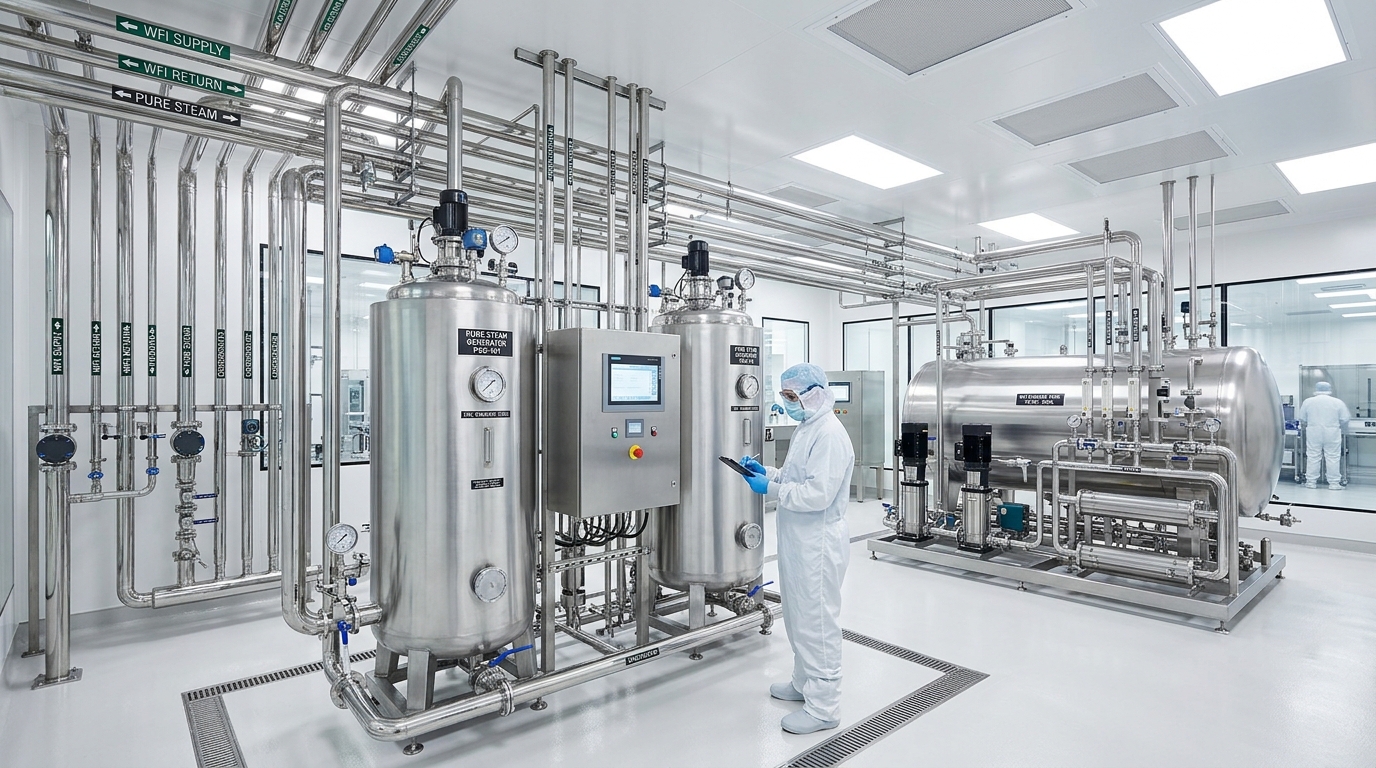
1. Project Overview & Context
Validation-compliant thermal optimization and industrial heat pump integration recovering low-grade cleanroom HVAC exhaust heat to preheat pure water generation and LTHW loops.
2. Problem Statement
Pharmaceutical manufacturing facilities operate 24/7 HVAC air handlers (AHUs) with high fresh air change rates, exhausting massive quantities of conditioned air while simultaneously firing boilers to generate high-pressure clean steam. Stringent GMP validation constraints traditionally discouraged plant modifications.
3. Objectives
1. Design a non-invasive heat recovery run-around coil system for cleanroom exhaust. 2. Couple exhaust heat with an industrial high-temperature heat pump (COP 4.2) to generate 75 °C Low Temperature Hot Water (LTHW). 3. Maintain N+1 validation redundancy and zero cross-contamination risk. 4. Reduce pharmaceutical site Scope 1 emissions by 25%.
4. Simulation Setup & Thermodynamic Selection
Aspen Plus rate-based HVAC thermal model coupled with heat pump refrigerant cycle optimization (R1233zd(E) low-GWP working fluid). Evaluated against cleanroom air turnover standards.
5. Process Flow & Reduction Chemistry
Aspen Plus rate-based HVAC thermal model coupled with heat pump refrigerant cycle optimization (R1233zd(E) low-GWP working fluid). Evaluated against cleanroom air turnover standards.
6. Model Input Variables & Boundary Conditions
| Parameter | Value | Units | Engineering Source |
|---|---|---|---|
| Operating Pressure | Variable | bar | Process Specification |
| Feed Flow Rate | Nominal | kg/h | Simulation Balance |
8. Results & Findings
9. Engineering Discussion & Trade-Off Analysis
By utilizing a separate closed-loop heat transfer fluid between exhaust AHUs and supply air handlers, the system provides absolute segregation with zero possibility of cleanroom contamination. The industrial heat pump delivers reliable base-load space heating.
10. Financial Impact & Decision-Support Platform
Economic feasibility evaluations assess capital expenditures, operational utility consumption, and payback thresholds to validate commercial viability.
11. Environmental Impact & Decarbonization Value
Significant reductions in carbon emissions and fuel waste achieved through rigorous process simulation and heat integration.
12. Model Limitations & Scope Boundaries
Requires low-GWP refrigerant compliance under F-gas regulations.
13. Engineering Conclusions
Validation-friendly thermal heat recovery offers life sciences companies an immediate, compliant pathway to partial electrification and rapid carbon abatement.
14. Future Development & Digital Twin Integration
Integration with clean steam generator blowdown recovery.
16. Technical Video Walkthrough
Watch on YouTube Channel (@AndrewOmwengaProcessEng)Full Video Tutorial Available on YouTube
Watch Eng. Andrew Omwenga demonstrate the complete process simulation step-by-step.
Watch Tutorial VideoNeed a similar analysis for your process plant?
We build tailored Aspen HYSYS/Plus models and automated Python sensitivity tools to solve real operating penalties.