Tissue & Paper Mill Hood Exhaust Heat Recapture System
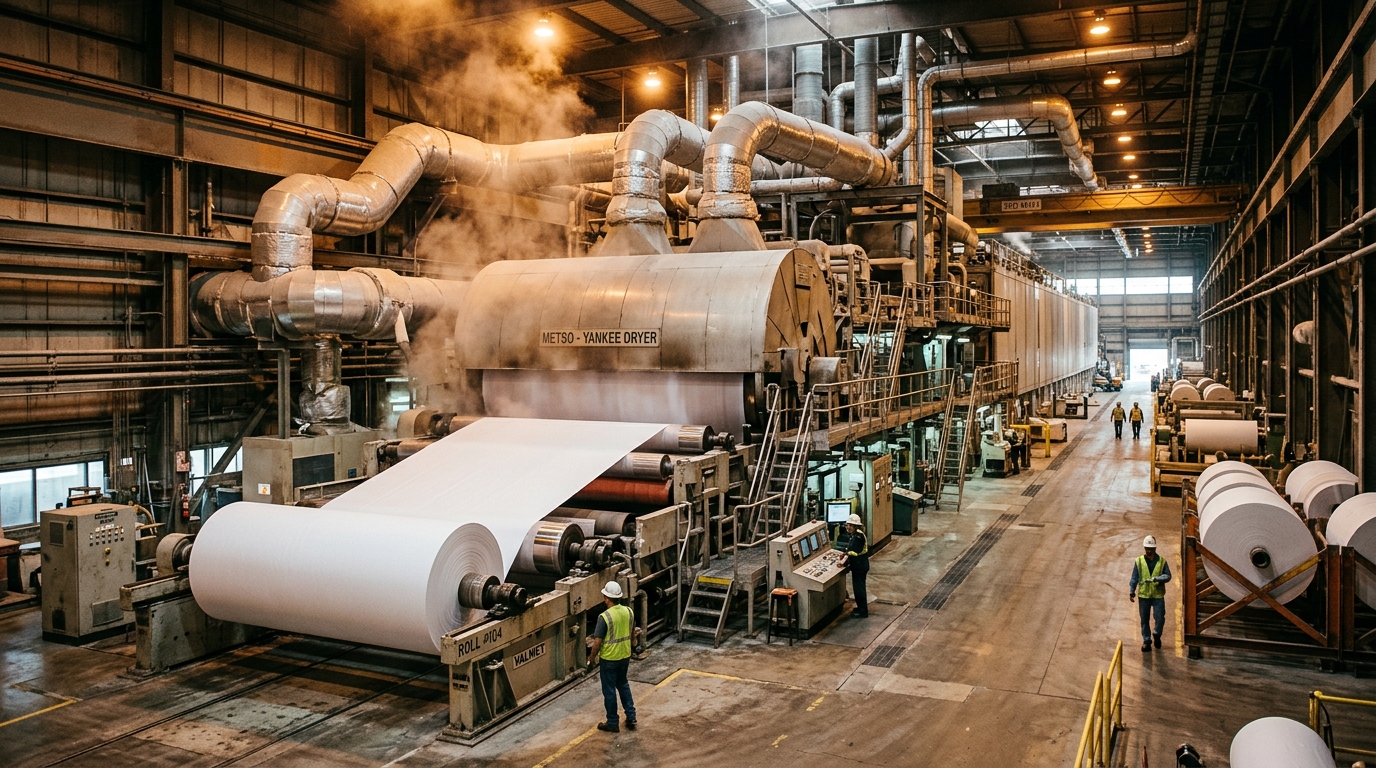
Heavy-duty particulate-tolerant condensing heat recovery system capturing 5.2 MW of waste heat from paper machine Yankee dryer hoods to preheat process water and hall ventilation air.
1. Project Overview & Context
Heavy-duty particulate-tolerant condensing heat recovery system capturing 5.2 MW of waste heat from paper machine Yankee dryer hoods to preheat process water and hall ventilation air.
2. Problem Statement
Paper and tissue manufacturing machines consume enormous quantities of natural gas and high-pressure steam to dry paper webs. The Yankee hood exhaust releases 125 °C moist, dusty air loaded with paper fibers and moisture, representing 35% of total mill thermal energy losses.
3. Objectives
1. Model high-temperature moist exhaust gas condensation in Aspen Plus. 2. Design self-cleaning spray condensing scrubbers to prevent paper dust clogging. 3. Supply preheated process water (65 °C) and hall makeup air (40 °C). 4. Cut mill natural gas consumption by 35,000 MWh annually.
4. Simulation Setup & Thermodynamic Selection
Aspen Plus multi-phase gas-liquid simulation with particulate holdup estimation. Sized heavy-duty stainless steel direct-contact towers and shell-and-tube economizers.
5. Process Flow & Reduction Chemistry
Aspen Plus multi-phase gas-liquid simulation with particulate holdup estimation. Sized heavy-duty stainless steel direct-contact towers and shell-and-tube economizers.
6. Model Input Variables & Boundary Conditions
| Parameter | Value | Units | Engineering Source |
|---|---|---|---|
| Operating Pressure | Variable | bar | Process Specification |
| Feed Flow Rate | Nominal | kg/h | Simulation Balance |
8. Results & Findings
9. Engineering Discussion & Trade-Off Analysis
The self-cleaning design prevents paper dust from building up on heat transfer surfaces, providing uninterrupted 24/7 mill uptime. The captured energy preheats freshwater before it enters the boiler house and supplies low-pressure hot water to plant drying fans.
10. Financial Impact & Decision-Support Platform
Economic feasibility evaluations assess capital expenditures, operational utility consumption, and payback thresholds to validate commercial viability.
11. Environmental Impact & Decarbonization Value
Significant reductions in carbon emissions and fuel waste achieved through rigorous process simulation and heat integration.
12. Model Limitations & Scope Boundaries
Requires stainless steel construction to withstand trace organic acids in paper vapors.
13. Engineering Conclusions
Heavy-duty condensing heat recovery transforms paper mill exhaust liabilities into reliable, high-yield energy assets.
14. Future Development & Digital Twin Integration
Coupling with black liquor recovery boiler economizer optimization.
16. Technical Video Walkthrough
Watch on YouTube Channel (@AndrewOmwengaProcessEng)Full Video Tutorial Available on YouTube
Watch Eng. Andrew Omwenga demonstrate the complete process simulation step-by-step.
Watch Tutorial VideoNeed a similar analysis for your process plant?
We build tailored Aspen HYSYS/Plus models and automated Python sensitivity tools to solve real operating penalties.