Industrial Steam Power Plant & Rankine Cycle Energy Optimization
Thermodynamic simulation of an industrial combined heat and power (CHP) steam plant in Aspen HYSYS, optimizing turbine extraction pressures, boiler efficiency, and condenser cooling.
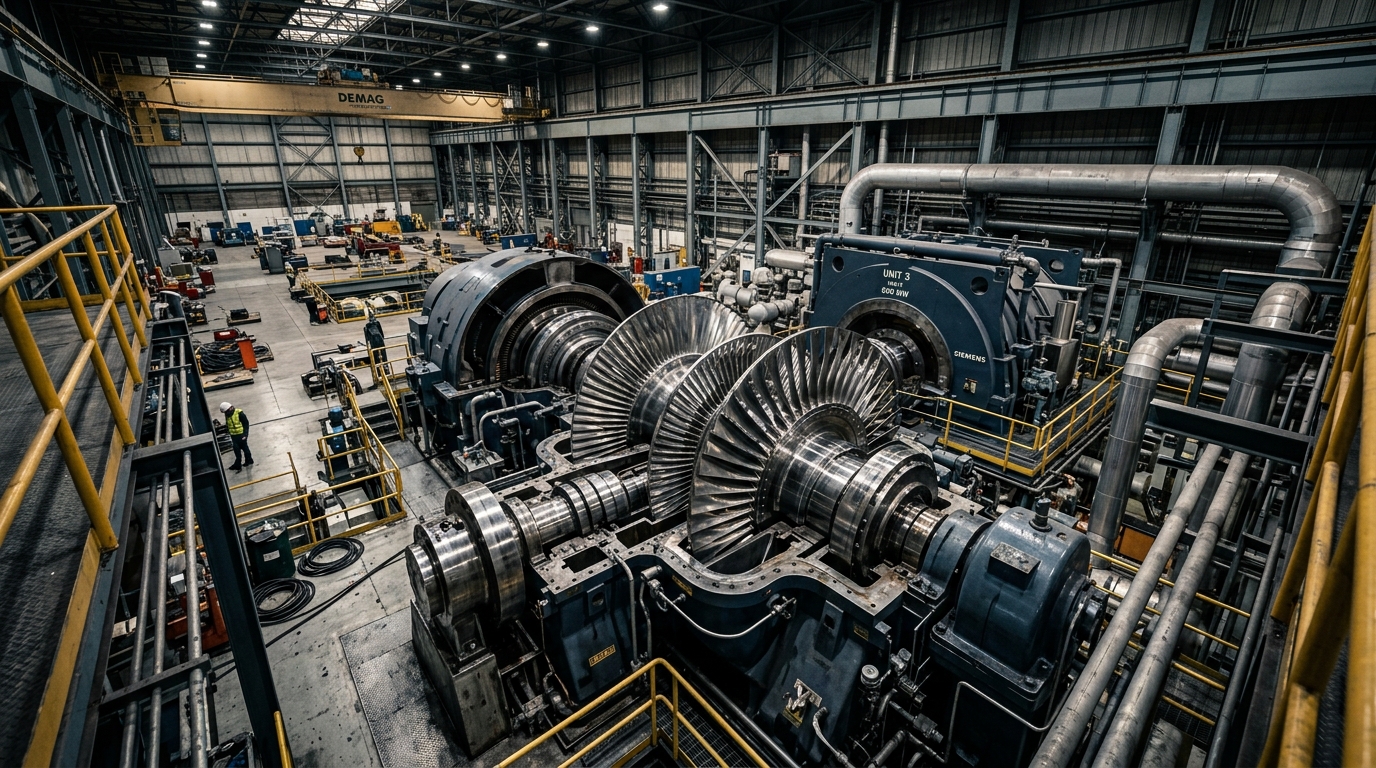
1. Project Overview & Context
Thermodynamic simulation of an industrial combined heat and power (CHP) steam plant in Aspen HYSYS, optimizing turbine extraction pressures, boiler efficiency, and condenser cooling.
2. Problem Statement
Industrial steam networks often suffer from uncoordinated pressure letdown across control valves, resulting in lost power generation potential.
3. Objectives
1. Model multi-stage steam turbine expansion with high-pressure and low-pressure steam extraction. 2. Calculate overall Rankine cycle thermal efficiency. 3. Eliminate throttling steam valve losses by installing backpressure steam turbines.
4. Simulation Setup & Thermodynamic Selection
Aspen HYSYS steam package model utilizing ASME Steam Tables. HP steam generated at 60 bar, 480 °C, with medium-pressure extraction at 12 bar and low-pressure extraction at 3.5 bar.
5. Process Flow & Reduction Chemistry
Aspen HYSYS steam package model utilizing ASME Steam Tables. HP steam generated at 60 bar, 480 °C, with medium-pressure extraction at 12 bar and low-pressure extraction at 3.5 bar.
6. Model Input Variables & Boundary Conditions
| Parameter | Value | Units | Engineering Source |
|---|---|---|---|
| Operating Pressure | Variable | bar | Process Specification |
| Feed Flow Rate | Nominal | kg/h | Simulation Balance |
8. Results & Findings
9. Engineering Discussion & Trade-Off Analysis
Replacing letdown stations with extraction turbines captured an additional 2.4 MW of power without increasing boiler fuel consumption.
10. Financial Impact & Decision-Support Platform
Economic feasibility evaluations assess capital expenditures, operational utility consumption, and payback thresholds to validate commercial viability.
11. Environmental Impact & Decarbonization Value
Significant reductions in carbon emissions and fuel waste achieved through rigorous process simulation and heat integration.
12. Model Limitations & Scope Boundaries
Turbine isentropic efficiency assumed constant at 84% across varying seasonal load demands.
13. Engineering Conclusions
Optimizing steam distribution networks with backpressure turbines significantly increases industrial facility energy efficiency.
14. Future Development & Digital Twin Integration
Integration of biomass co-firing thermodynamic balances into boiler combustion models.
16. Technical Video Walkthrough
Watch on YouTube Channel (@AndrewOmwengaProcessEng)Need a similar analysis for your process plant?
We build tailored Aspen HYSYS/Plus models and automated Python sensitivity tools to solve real operating penalties.