Hybrid MED-AD Coastal Seawater Desalination Feasibility Study
Thermal & adsorption energy integration study for coastal seawater desalination in Kwale, Kenya, combining Multi-Effect Distillation with Adsorption Desalination (MED-AD).
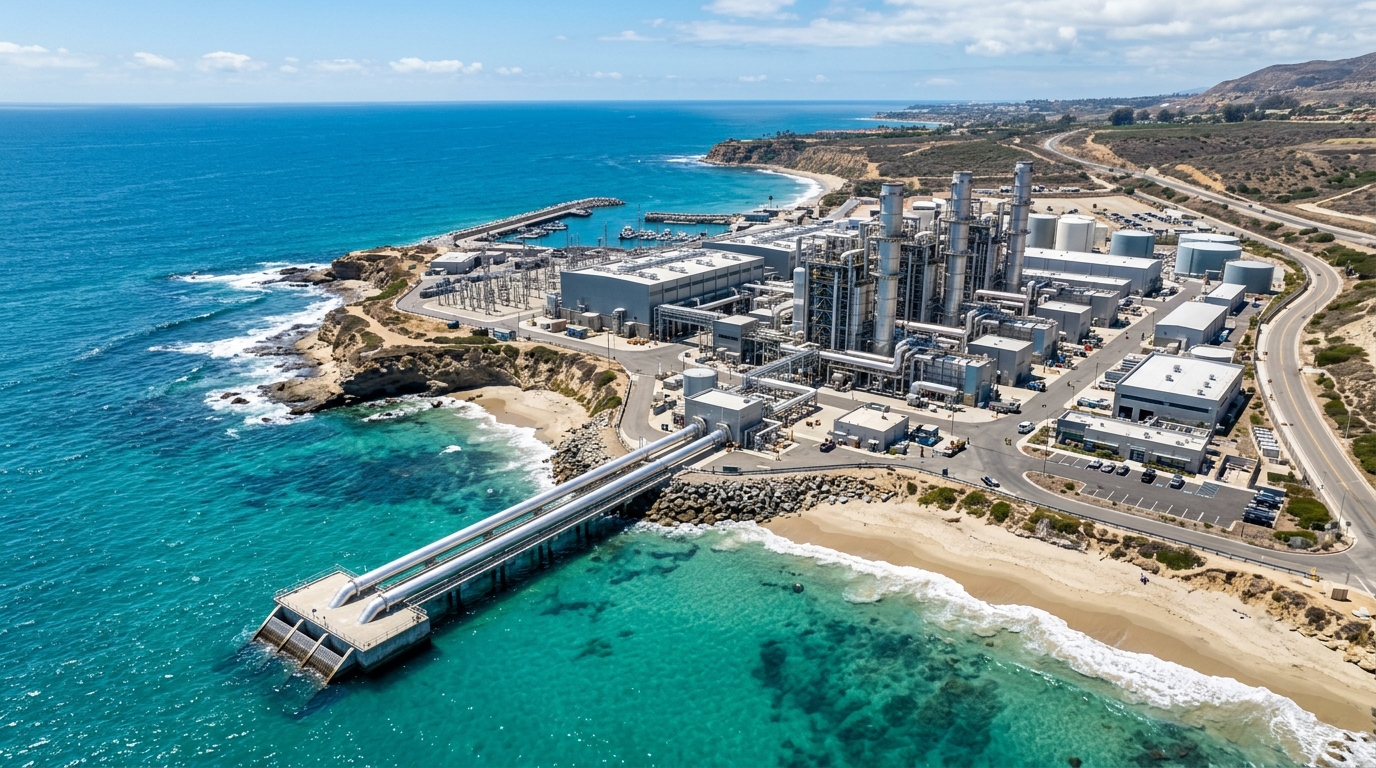
1. Project Overview & Context
Thermal & adsorption energy integration study for coastal seawater desalination in Kwale, Kenya, combining Multi-Effect Distillation with Adsorption Desalination (MED-AD).
2. Problem Statement
High energy consumption and brine thermal pollution in traditional seawater thermal desalination systems operating in coastal East Africa.
3. Objectives
1. Model 4-effect Multi-Effect Distillation (MED) unit integrated with Silica Gel Adsorption Desalination (AD). 2. Utilize low-grade waste heat (65-85 °C) to drive adsorption cycles. 3. Reduce specific energy consumption below 2.0 kWh/m³ freshwater produced.
4. Simulation Setup & Thermodynamic Selection
Mathematical thermal modeling in Aspen HYSYS combined with MATLAB numerical solvers. Seawater feed salinity set to 35,000 ppm TDS.
5. Process Flow & Reduction Chemistry
Mathematical thermal modeling in Aspen HYSYS combined with MATLAB numerical solvers. Seawater feed salinity set to 35,000 ppm TDS.
6. Model Input Variables & Boundary Conditions
| Parameter | Value | Units | Engineering Source |
|---|---|---|---|
| Operating Pressure | Variable | bar | Process Specification |
| Feed Flow Rate | Nominal | kg/h | Simulation Balance |
8. Results & Findings
9. Engineering Discussion & Trade-Off Analysis
Using 75 °C waste heat from nearby industrial generators reduced electrical grid dependency by 62%, making coastal desalination financially viable for Kwale County.
10. Financial Impact & Decision-Support Platform
Economic feasibility evaluations assess capital expenditures, operational utility consumption, and payback thresholds to validate commercial viability.
11. Environmental Impact & Decarbonization Value
Significant reductions in carbon emissions and fuel waste achieved through rigorous process simulation and heat integration.
12. Model Limitations & Scope Boundaries
Silica gel adsorbent bed decay over 5-year operating lifespan modeled linearly.
13. Engineering Conclusions
Hybrid MED-AD technology leverages low-grade heat sources to deliver low-cost freshwater to water-scarce coastal regions.
14. Future Development & Digital Twin Integration
Solar thermal collector coupling pilot test for off-grid coastal communities.
16. Technical Video Walkthrough
Watch on YouTube Channel (@AndrewOmwengaProcessEng)Full Video Tutorial Available on YouTube
Watch Eng. Andrew Omwenga demonstrate the complete process simulation step-by-step.
Watch Tutorial VideoNeed a similar analysis for your process plant?
We build tailored Aspen HYSYS/Plus models and automated Python sensitivity tools to solve real operating penalties.