Hospital Steam Trap Retrofit & Low-Temperature Hot Water Loop
Sitewide steam distribution audit and venturi/orifice permanent steam trap replacement across 340 steam traps, eliminating live steam losses, water hammer, and cutting hospital fuel bills by 12%.
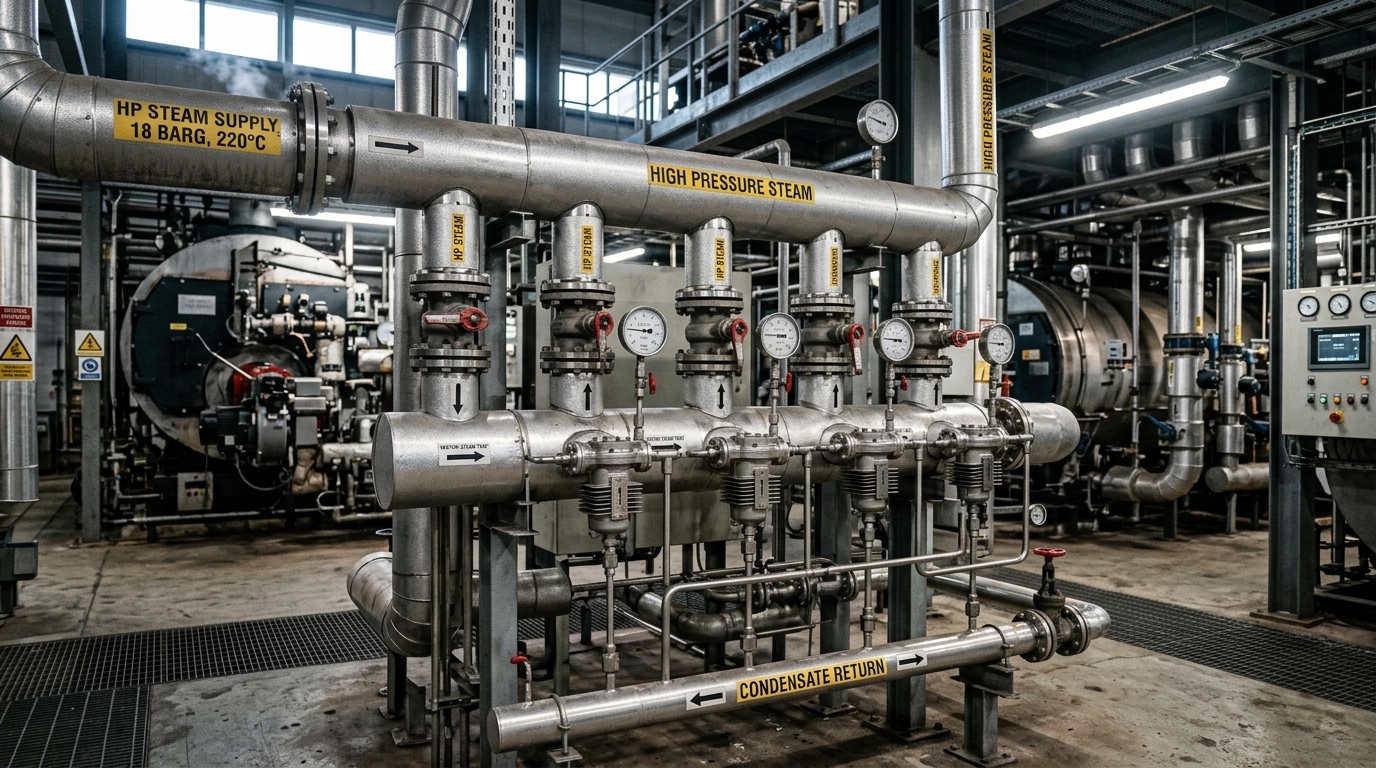
1. Project Overview & Context
Sitewide steam distribution audit and venturi/orifice permanent steam trap replacement across 340 steam traps, eliminating live steam losses, water hammer, and cutting hospital fuel bills by 12%.
2. Problem Statement
Healthcare facilities rely on 24/7 steam for sterilization (CSSD), heating, and laundry. Conventional mechanical steam traps (inverted bucket & thermostatic) suffer 15–20% failure rates per year, causing massive live-steam venting, boiler over-firing, condensate backup, and dangerous water hammer in patient wards.
3. Objectives
1. Audit complete steam distribution and condensate return network in Aspen HYSYS. 2. Replace failed mechanical traps with permanently-sized venturi/GEM orifice steam traps. 3. Model flash steam recovery into a dedicated Low-Temperature Hot Water (LTHW) loop for hospital space heating. 4. Eliminate maintenance overhead and achieve sub-12-month payback.
4. Simulation Setup & Thermodynamic Selection
Sub-nodal steam hydraulic modeling in Aspen HYSYS using ASME steam tables. Sized venturi orifice diameters based on continuous two-phase flash condensate dynamics across varying seasonal hospital loads.
5. Process Flow & Reduction Chemistry
Sub-nodal steam hydraulic modeling in Aspen HYSYS using ASME steam tables. Sized venturi orifice diameters based on continuous two-phase flash condensate dynamics across varying seasonal hospital loads.
6. Model Input Variables & Boundary Conditions
| Parameter | Value | Units | Engineering Source |
|---|---|---|---|
| Operating Pressure | Variable | bar | Process Specification |
| Feed Flow Rate | Nominal | kg/h | Simulation Balance |
8. Results & Findings
9. Engineering Discussion & Trade-Off Analysis
Venturi orifice steam traps operate with no moving parts, preventing steam loss and eliminating mechanical wear. Condensate is continuously evacuated, preventing water hammer and stabilizing steam pressure across critical hospital sterilizers.
10. Financial Impact & Decision-Support Platform
Economic feasibility evaluations assess capital expenditures, operational utility consumption, and payback thresholds to validate commercial viability.
11. Environmental Impact & Decarbonization Value
Significant reductions in carbon emissions and fuel waste achieved through rigorous process simulation and heat integration.
12. Model Limitations & Scope Boundaries
Requires accurate condensate load profiling for proper orifice sizing.
13. Engineering Conclusions
Steam trap modernization is the fastest, lowest-risk efficiency investment available for hospitals and institutional campuses.
14. Future Development & Digital Twin Integration
Automated wireless acoustic temperature sensor network integration.
16. Technical Video Walkthrough
Watch on YouTube Channel (@AndrewOmwengaProcessEng)Full Video Tutorial Available on YouTube
Watch Eng. Andrew Omwenga demonstrate the complete process simulation step-by-step.
Watch Tutorial VideoNeed a similar analysis for your process plant?
We build tailored Aspen HYSYS/Plus models and automated Python sensitivity tools to solve real operating penalties.