Cumene Industrial Process Simulation & High-Purity Distillation
Simulating benzene alkylation with propylene in Aspen Plus, featuring a multi-column distillation train, 99.98% product purity optimization, and unreacted benzene recycling.
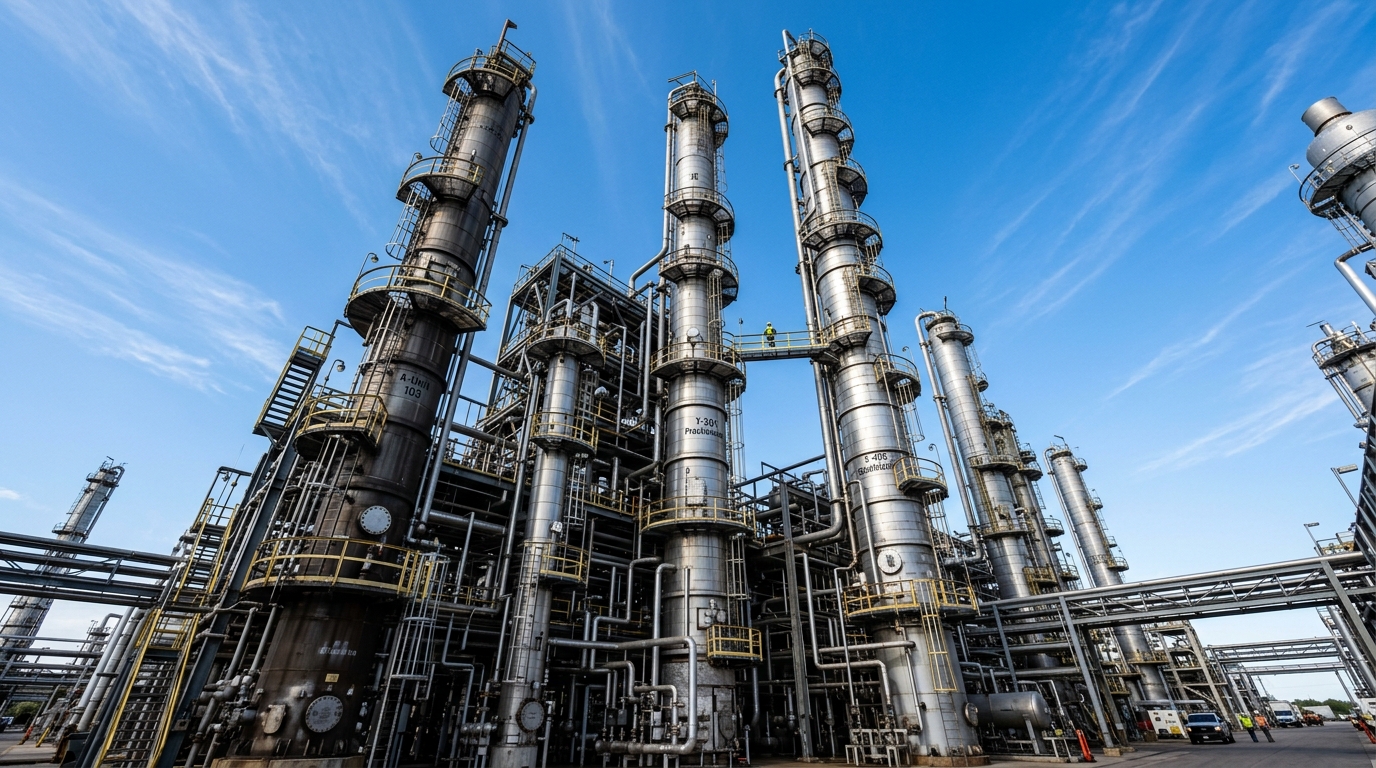
1. Project Overview & Context
Simulating benzene alkylation with propylene in Aspen Plus, featuring a multi-column distillation train, 99.98% product purity optimization, and unreacted benzene recycling.
2. Problem Statement
Industrial cumene production requires high selectivity to avoid diisopropylbenzene (DIPB) byproduct formation while maximizing energy efficiency in the benzene recovery column.
3. Objectives
1. Model fixed-bed catalytic alkylation and transalkylation reactors in Aspen Plus (RCSTR/RPlug). 2. Design a 3-column distillation sequence (Benzene Column, Cumene Column, DIPB Column). 3. Optimize recycle ratio to achieve 99.98 wt% cumene purity.
4. Simulation Setup & Thermodynamic Selection
Aspen Plus rigorous simulation using NRTL-RK property package. Kinetic reaction rates incorporated for benzene-propylene alkylation and DIPB transalkylation over zeolite catalyst.
5. Process Flow & Reduction Chemistry
Aspen Plus rigorous simulation using NRTL-RK property package. Kinetic reaction rates incorporated for benzene-propylene alkylation and DIPB transalkylation over zeolite catalyst.
6. Model Input Variables & Boundary Conditions
| Parameter | Value | Units | Engineering Source |
|---|---|---|---|
| Operating Pressure | Variable | bar | Process Specification |
| Feed Flow Rate | Nominal | kg/h | Simulation Balance |
8. Results & Findings
9. Engineering Discussion & Trade-Off Analysis
Maintaining a 4.5:1 molar feed ratio of benzene to propylene in the reactor feed suppressed DIPB yield to under 2.1%, reducing heavy-ends separation duty significantly.
10. Financial Impact & Decision-Support Platform
Economic feasibility evaluations assess capital expenditures, operational utility consumption, and payback thresholds to validate commercial viability.
11. Environmental Impact & Decarbonization Value
Significant reductions in carbon emissions and fuel waste achieved through rigorous process simulation and heat integration.
12. Model Limitations & Scope Boundaries
Zeolite catalyst deactivation kinetics over extended operating cycles were modeled as pseudo-steady state.
13. Engineering Conclusions
Integrated reactor-recycle flowsheet simulation in Aspen Plus provides precise guidelines for high-purity petrochemical manufacturing.
14. Future Development & Digital Twin Integration
Dividing wall column (DWC) retrofit evaluation to merge Benzene and Cumene columns into a single shell.
16. Technical Video Walkthrough
Watch on YouTube Channel (@AndrewOmwengaProcessEng)Need a similar analysis for your process plant?
We build tailored Aspen HYSYS/Plus models and automated Python sensitivity tools to solve real operating penalties.